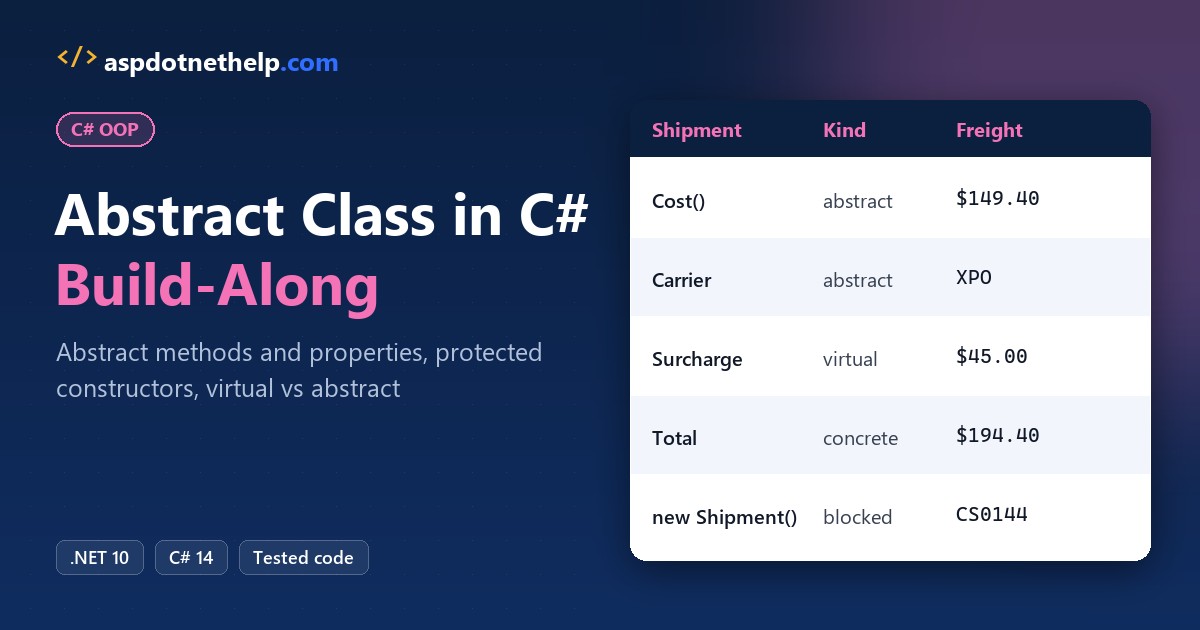
Abstraction in C#: Abstract Classes, Interfaces and a Real Example
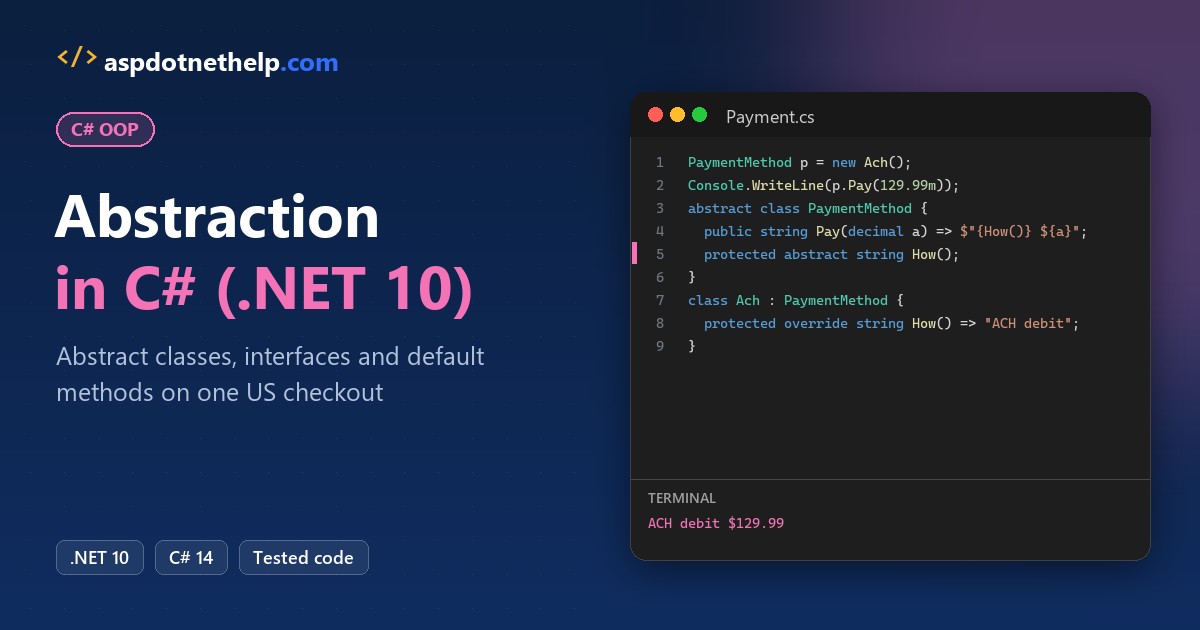
Abstraction in C#: code card with an abstract PaymentMethod class hiding a protected abstract How method, and the terminal output ACH debit $129.99

Say you’re building checkout for an Austin outdoor-gear store. It takes credit cards today, ACH bank debits next month and gift cards by the holidays, and the checkout code shouldn’t change each time. Quick answer: abstraction in C# means exposing what an object does, like Pay(amount), and hiding how it does it behind an abstract … Read more >>
Encapsulation in C# with Real-Time Example

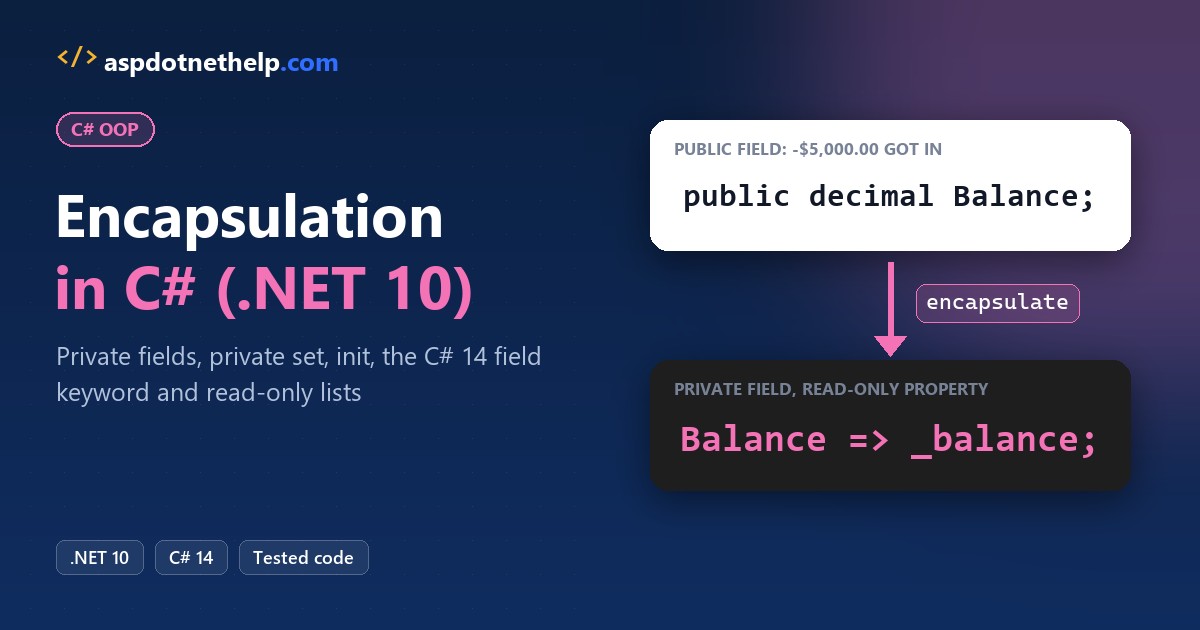
Encapsulation in C#: a public decimal Balance field turned into a read-only property public decimal Balance => _balance backed by a private field

Say you support the back end for a Columbus, Ohio credit union. A member’s checking balance suddenly reads -$5,000.00, yet no withdrawal ever ran. Quick answer: encapsulation in C# means keeping an object’s data private and letting outside code change it only through methods and properties that enforce the rules. We rebuilt that account on … Read more >>

Inheritance in C#: A Field Guide with Real Examples (.NET 10)

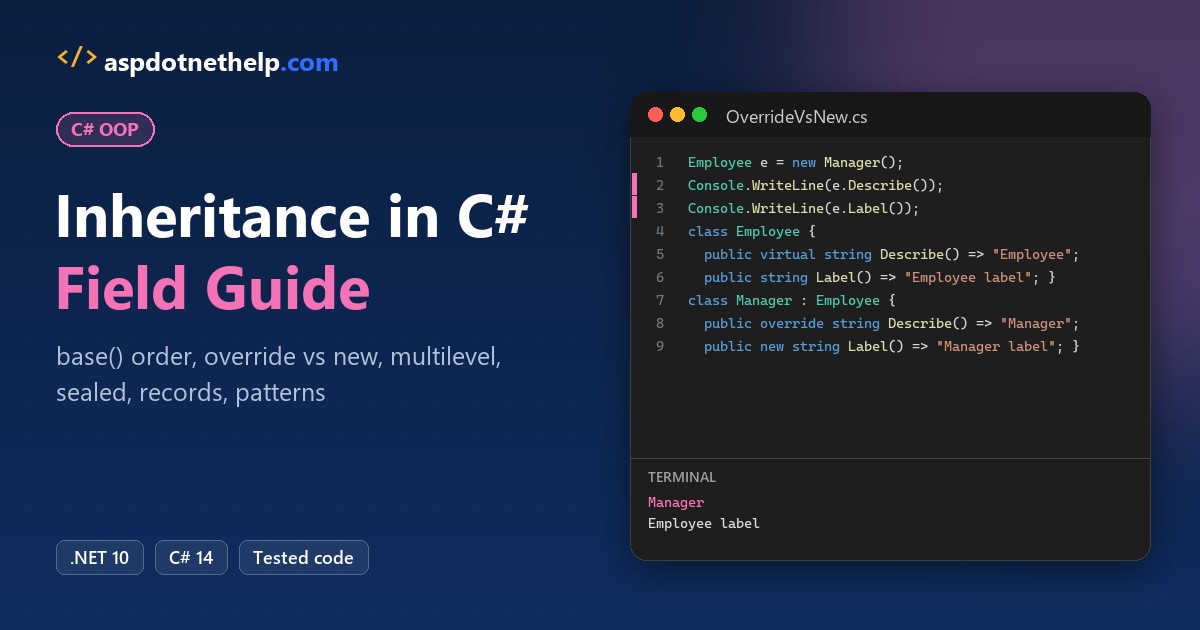
Inheritance in C#: override runs Manager.Describe through an Employee reference while new hides Label and runs the Employee version

Payroll code is where I see inheritance used well and abused most. Inheritance in C# lets a derived class reuse and extend a base class: write class Employee : Person, and every Employee gets the members of Person plus its own. In this tutorial, I’ll map out how inheritance in C# really behaves on .NET … Read more >>

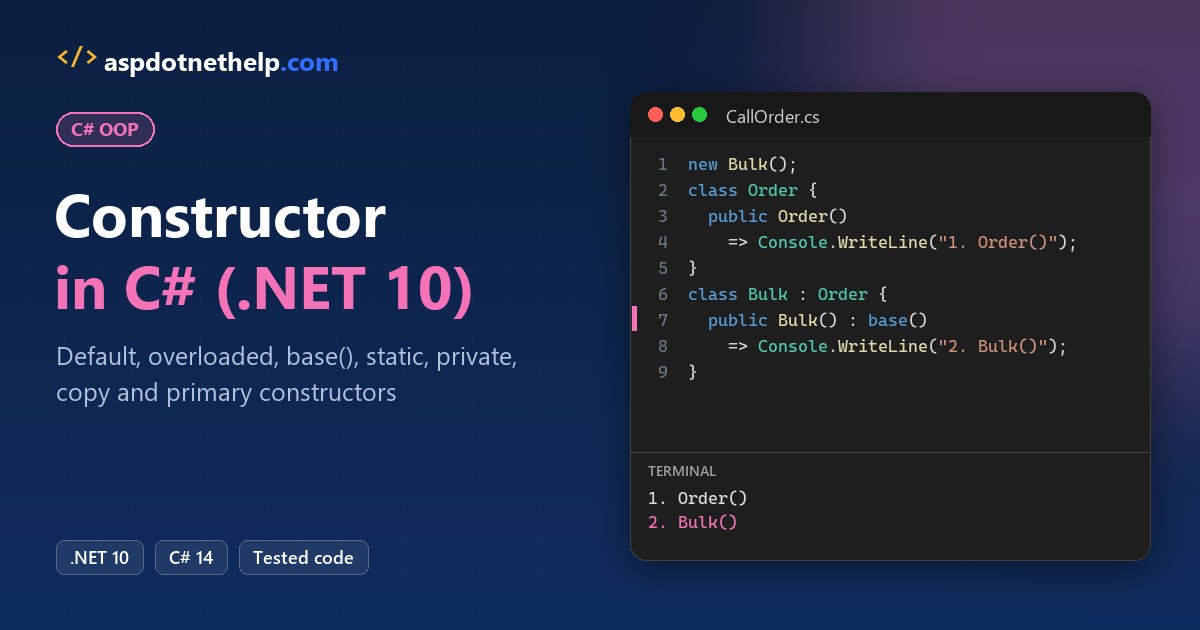
Constructor in C#: Every Type with Real Examples (.NET 10)

Constructor in C#: code card showing a derived class calling base() and the terminal output with the base constructor running first

Say you’re building order intake for a Seattle coffee roaster. Every order needs a customer, a five-digit ZIP code and at least one pound of beans, and a half-built order should never exist. Quick answer: a constructor in C# is the method named after the class, with no return type, that runs on new. That’s … Read more >>

How to Get the First and Last Day of the Month in C#

C# first and last day of the month table for October 2026, December 2026 and leap year February 2028

A month-end sales report I built for a retail client in Columbus, Ohio kept dropping orders placed on October 31. The C# code that picked the month’s first and last day looked fine, but the boundary was wrong. Here’s the short answer for C#: the first day of the month is new DateTime(d.Year, d.Month, 1), … Read more >>

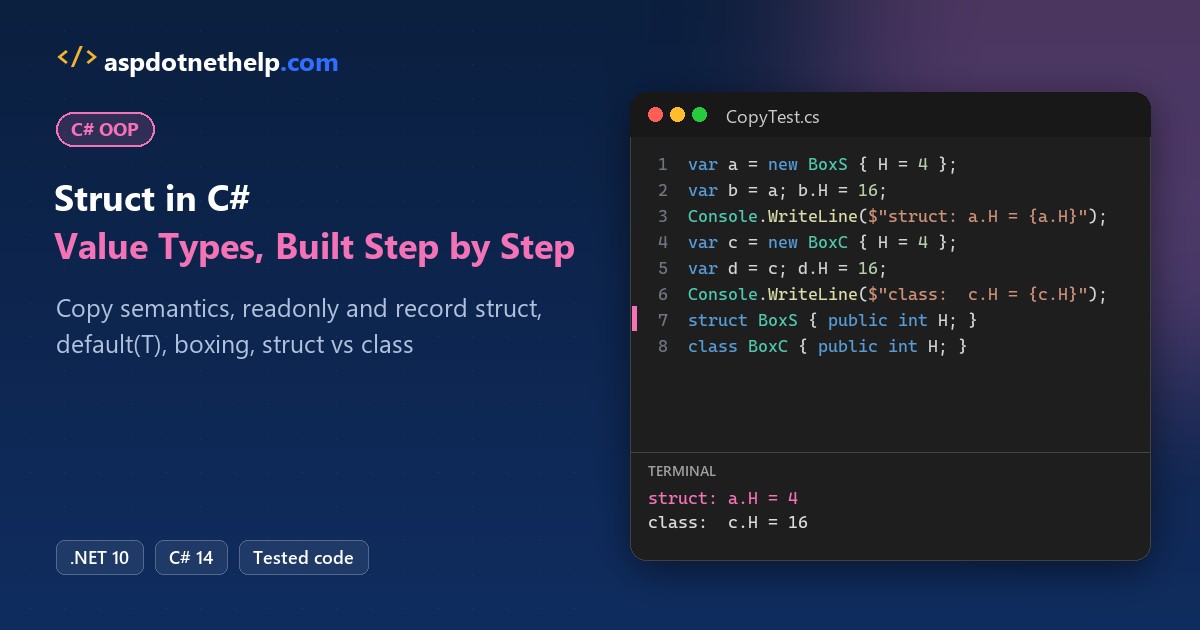
Struct in C#: Build a Value Type Step by Step (.NET 10)

Struct in C#: copying a struct leaves the original at 4, while copying a class changes the shared object to 16

Picture the shipping page of a Portland, Oregon, coffee roaster. Every bag ships in a carton, and each carton is just three numbers: length, width and height in inches. That’s the job of a struct in C#: a small value type that copies its data on assignment instead of sharing a reference. We’ll build that … Read more >>

Namespace in C#: File-Scoped, using and global using (.NET 10)

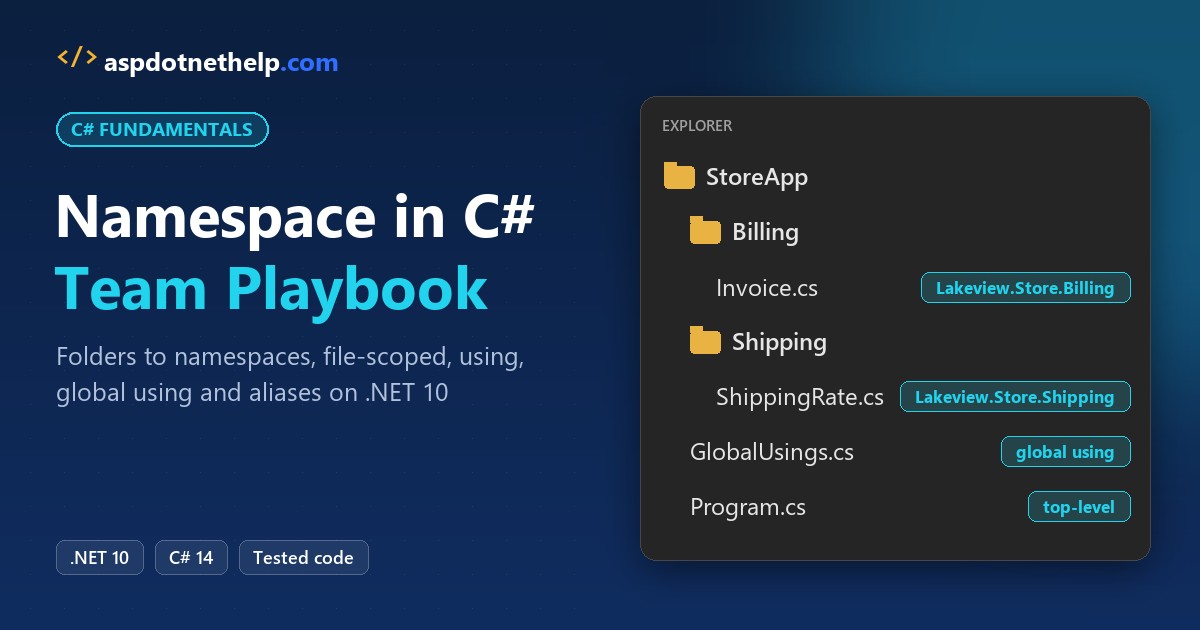
Namespace in C#: a StoreApp project tree where the Billing and Shipping folders map to the Lakeview.Store.Billing and Lakeview.Store.Shipping namespaces

Two classes called Order, one for billing and one for shipping, and the compiler needs to know which one you mean. That’s the whole reason namespaces exist. Quick answer: A namespace in C# is a named scope that groups related types and keeps their names unique. Declare it with namespace Lakeview.Store.Billing; and import it elsewhere … Read more >>